NEWS CENTER
How to Stabilize Radar Level Measurement in Corrosive Liquid Tanks: Antenna Material, Echo Paths and Process Conditions
Huachuang measurement and control Huachuang measurement and Control Technology Co., Ltd 2026-09-17 16:14
In tanks containing acids, alkalis, salt solutions or other corrosive process liquids, unstable level readings may appear as signal jumps, a value that remains at a fixed position, large fluctuations during filling or agitation, or measurement errors after a period of operation. These symptoms do not have one single cause. The material at the antenna or process-facing section must be checked against the liquid, while the roof nozzle, mounting position, internal structures, surface disturbance, foam, vapour, temperature and pressure can also affect the returned signal. A project should therefore not select a level meter from the phrase “corrosive liquid” alone. The liquid properties, tank geometry and process limits must be evaluated together.
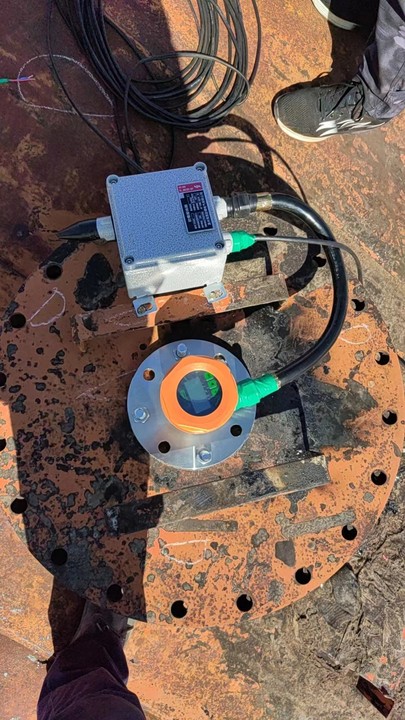
The main value of non-contact radar measurement is that the instrument does not require a probe to remain immersed in the liquid. This can reduce risks associated with direct exposure, wear or contamination of immersed components. Non-contact measurement, however, does not remove the need for correct installation. If the radar beam points toward an inlet pipe, agitator, tank wall or other fixed structure, the received echo may mix with the true liquid-surface echo. When the liquid level changes only slightly, a fixed structural echo may even appear as a persistent false level. The first design step is to collect the liquid name and concentration, normal and maximum temperature, process pressure, tank height and diameter, maximum and minimum levels, roof-nozzle dimensions, internal obstacles, inlet location and required control-system signal.
HCCK HCDAR-80 is intended for liquid measurement and is presented for corrosive-liquid level applications. Its configuration includes a lens-type/PTFE antenna, providing a clear material-selection direction for projects where the antenna material must be checked against the liquid. The final compatibility assessment must still consider the exact chemical composition, concentration and temperature. “Suitable for corrosive-liquid measurement” should not be interpreted as a reason to skip chemical-compatibility review for every possible medium.
HCDAR-80 has a 0–120 m measuring range, an 8° beam angle, a response time as fast as 0.6 seconds, a medium temperature range of −40 to 120°C, a process-pressure range of −0.1 to 2 MPa and accuracy of less than 2 mm. For tall tanks or processes with faster level changes, the range and response characteristics should be evaluated together with the actual tank geometry, surface movement and control-system refresh requirements. An 8° beam angle also means that the beam coverage must be checked during installation; radar technology does not eliminate echoes from walls, nozzles or internal structures. The HCDAR-8x series uses 76–81 GHz FMCW technology. Its available interfaces include two-wire 4–20 mA, four-wire 4–20 mA and RS485, and the final configuration must be checked against the ordered model and the control-system requirements.
The preferred mounting position should keep the beam away from the filling stream, agitator, heating coil, ladder and roof reinforcement, while aiming it toward a liquid-surface area that can provide a stable reflection. For a tank with a long nozzle, an eccentric manway or crowded roof structures, the beam path should be checked against the nozzle wall and internal obstacles before the flange, threaded connection or support arrangement is finalized. During commissioning, record the signal under empty-tank, stable-level, filling, discharge and near-high-level conditions. The engineer should distinguish real level movement from changes caused by fixed echoes. Foam, vapour, strong agitation or changing surface-reflection conditions should be included in the technical assessment rather than treated as secondary details.
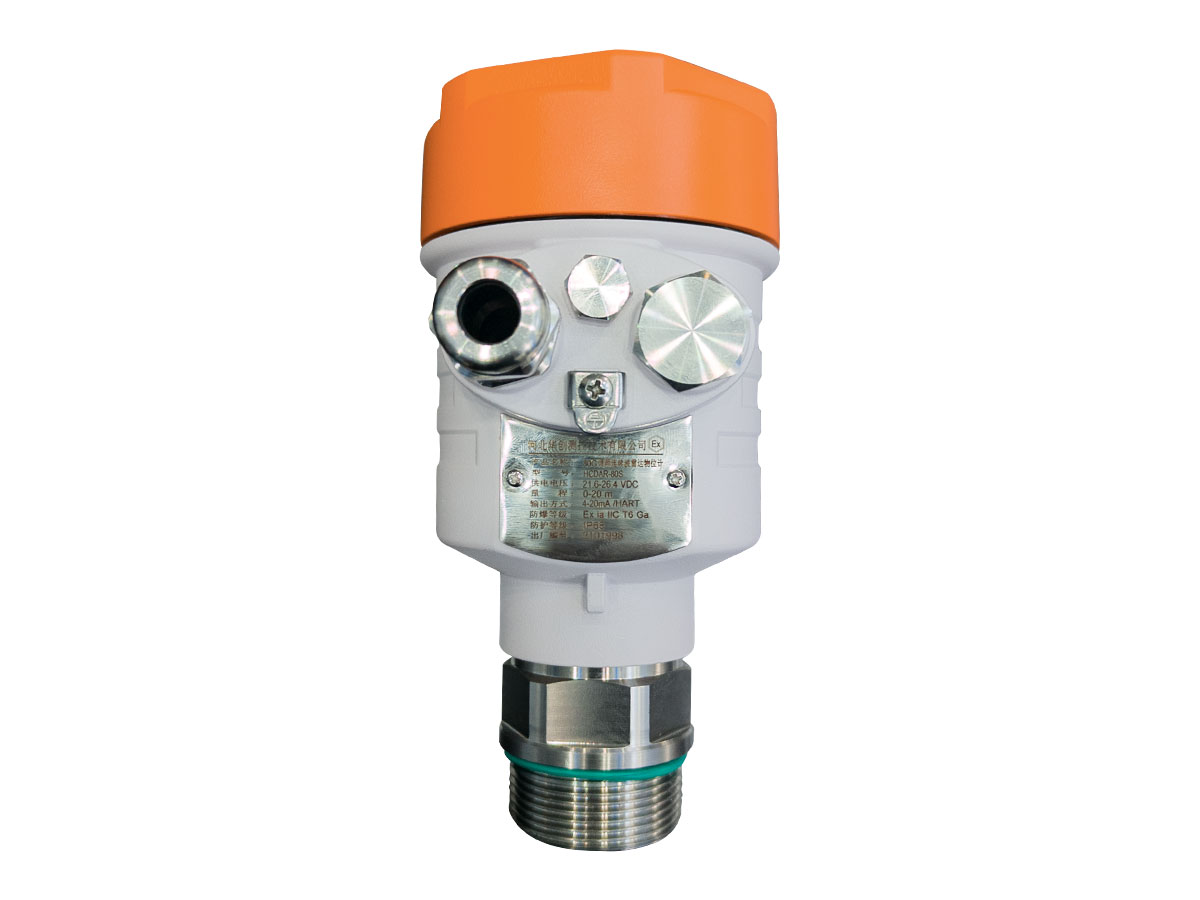
The customer should provide the liquid name, main composition or concentration, temperature and pressure range, tank dimensions, zero and full-level positions, nozzle and flange photographs, internal obstacles, filling and discharge arrangements, site protection requirements and the input interface of the PLC, DCS or remote system. HCCK can then further evaluate whether the antenna material, mounting location, range and output configuration of HCDAR-80 match the project. Stable level measurement in a corrosive-liquid tank depends not on one isolated specification, but on the combined match between material compatibility, non-contact measurement, beam path, process limits and control-system interface.
For professional support, visit our Website at www.hhcck.cn/, contact our team via WhatsApp: +86 195 3225 4537, or Email: sales@hhcck.com.


South of Puhui Street, west of Guangsheng East Road, High tech Zone, Fengnan District, Tangshan City, Hebei Province





Technical support:

Tips
Submitted successfully
Back Index