NEWS CENTER
Why Does Level Measurement Become Unstable in High-Temperature Molten Liquids or Solids? Selection and Installation of High-Temperature Radar Level Sensors
Huachuang measurement and control Huachuang measurement and Control Technology Co., Ltd 2026-09-18 11:03
In vessels used for molten metals, glass melt, furnace charge, hot minerals or other high-temperature liquids and solids, the main measurement challenge is not simply choosing a range. Heat load, vapour or flue gas, surface shape and mounting geometry all influence echo stability. High temperature exposes the instrument to continuous thermal radiation. A molten surface may fluctuate, splash or develop slag, while a solid surface may form a slope, an angle of repose or local depressions. When the radar antenna is installed close to a high-temperature process, the instrument’s temperature boundary, mounting distance and heat-dissipation conditions become key selection factors.
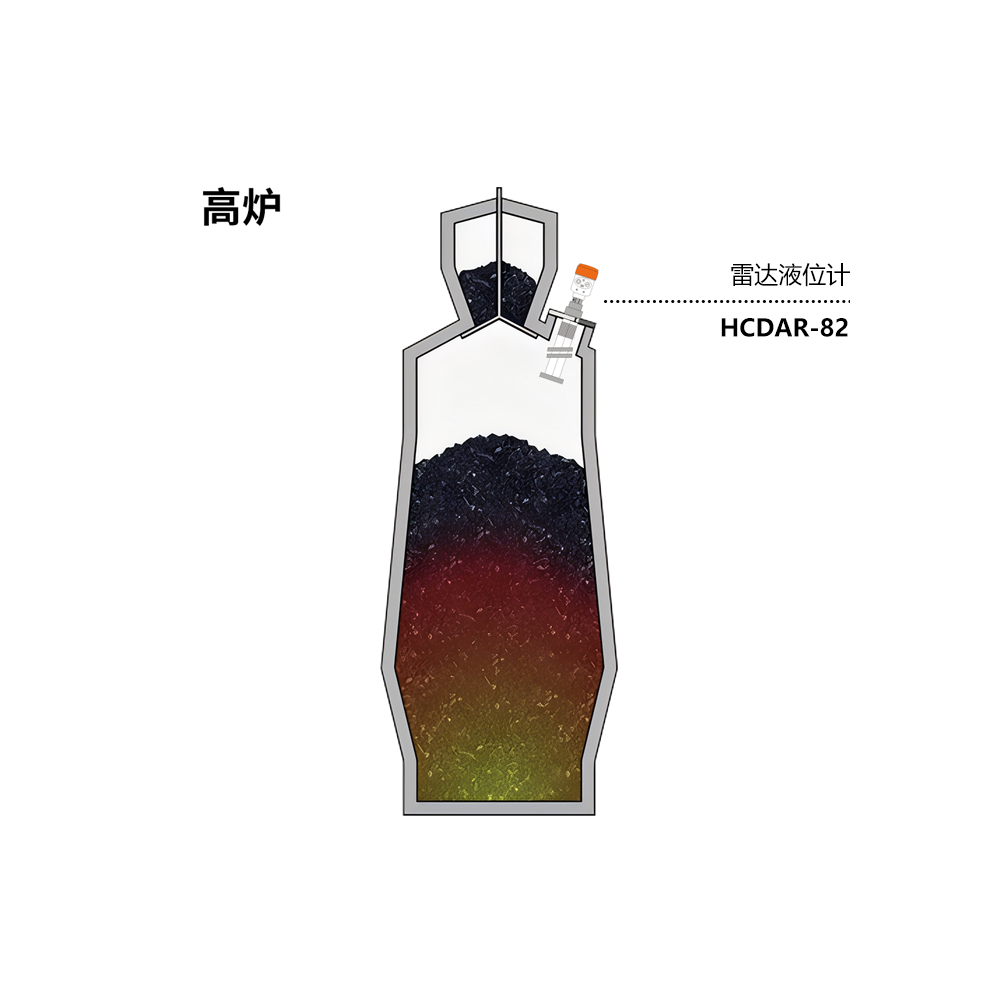
When the reading jumps, stays at a fixed value or causes frequent high- and low-level alarms, the problem should be separated into three checks. First, are the actual medium temperature and process pressure within the applicable limits? Second, does the radar beam point at a tank wall, heating structure, inlet, outlet or another fixed reflector? Third, are high-temperature vapour, dust, flue gas or strong surface movement affecting the measurement path? For hot solids, the changing surface profile may also shift the centre of the returned echo. Before selection, the project should provide normal and maximum temperature, process pressure, vessel height, maximum and minimum level, roof space, internal obstacles, filling direction, surface profile and control-system interface—not only the general description “high temperature.”
HCCK HCDAR-82 is intended for liquid and solid measurement. It has a 0–60 m measuring range, a 3° beam angle, a response time as fast as 0.6 seconds and accuracy of less than 2 mm. Its medium-temperature range is −40 to 1200°C and its process-pressure range is −0.1 to 2 MPa; a quartz isolation flange is required for the specified high-temperature and high-pressure arrangement. The product configuration includes a lens-type/PTFE antenna and flange or G3.5 threaded process connections. These specifications must be assessed together with the vessel height, mounting interface and heat load. A wide temperature range alone does not mean that insulation and heat-dissipation planning can be omitted.
The high-temperature measurement path is not only the radar instrument. The instrument, quartz isolation flange and heat-dissipation device work as one installation arrangement. The quartz isolation flange creates the required isolation structure for high-temperature and high-pressure measurement conditions, while heat dissipation must be planned around the available mounting space, thermal radiation direction and nearby equipment. A 3° beam angle concentrates energy toward the target surface, but it also makes accurate positioning important. If the beam sees an inlet, vessel wall or internal support, a narrow beam does not automatically remove fixed echoes. HCDAR-82 provides 4–20 mA HART and RS485 MODBUS-RTU outputs, with a working frequency of 76–81 GHz and IP68 protection. The final signal and mounting configuration should be checked against the ordered model and the control system.
The first step is to define the temperature and pressure boundary. Confirm whether the mounting point is exposed to the actual medium temperature, the gas-phase temperature or a lower temperature after heat transfer through the vessel structure. Then compare the maximum value with the project condition within the 1200°C range. If pressure is also present, include the quartz isolation flange in the initial design instead of treating it as a later accessory. The second step is to review the beam path using the vessel section and equipment layout. Check whether the antenna can see the filling point, heating tube, furnace wall, stiffener or another fixed reflector, and aim the beam at an area that can represent the average material level. The third step is to reserve maintenance space for inspection of wiring, flange sealing and heat-dissipation components.
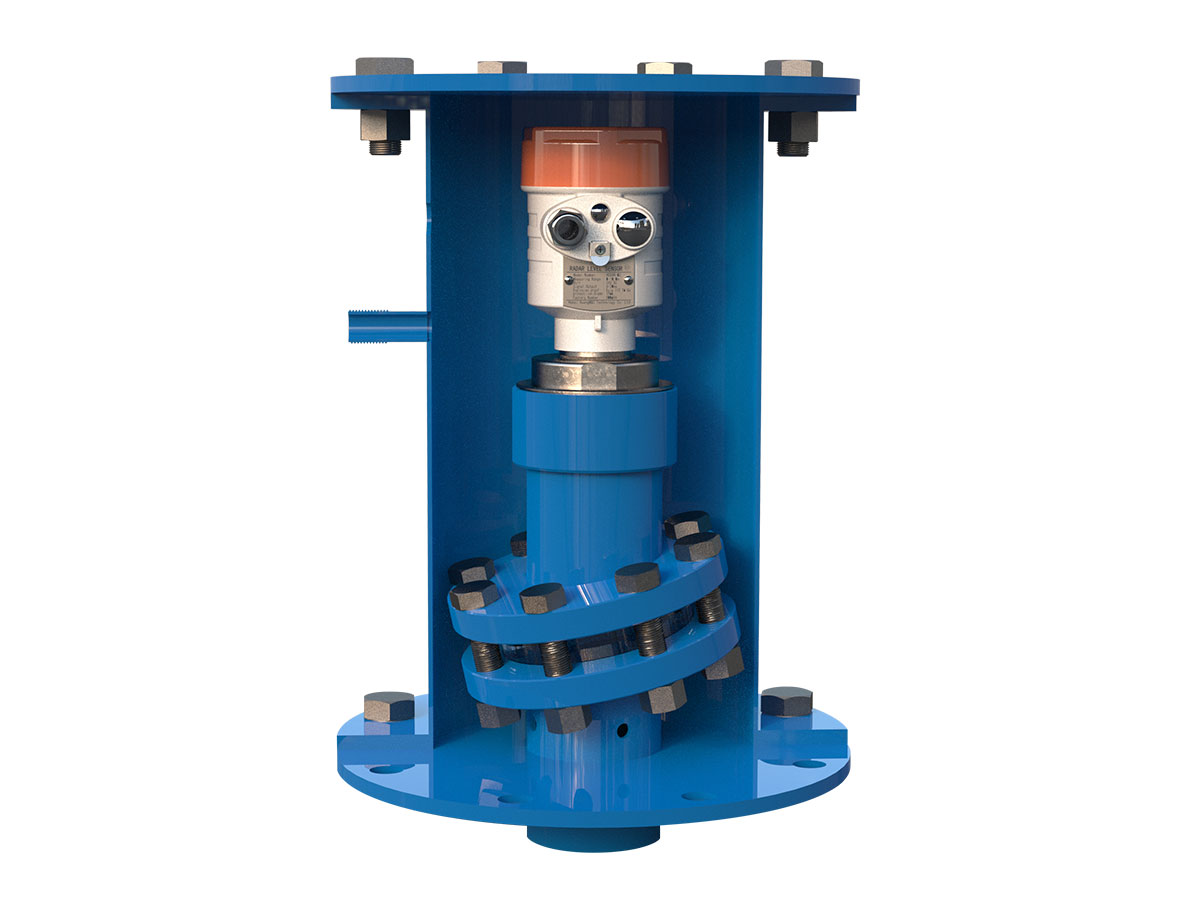
During commissioning, record echo behaviour under empty-vessel, stable-surface, filling, discharge and changing-level conditions. Separate actual level movement from echoes generated by fixed structures. For molten liquids, provide information about agitation, splashing, slag and vapour. For solids, provide the angle of repose, surface inclination, possible bridging and periodic collapse. With these site data, HCCK can further evaluate whether the range, beam angle, quartz isolation flange, heat-dissipation arrangement and output interface of HCDAR-82 match the application. Reliable level measurement in high-temperature processes comes from a complete thermal boundary, beam-path and mounting design—not from one temperature specification alone.
For professional support, visit our Website at www.hhcck.cn/, contact our team via WhatsApp: +86 195 3225 4537, or Email: sales@hhcck.com.


South of Puhui Street, west of Guangsheng East Road, High tech Zone, Fengnan District, Tangshan City, Hebei Province





Technical support:

Tips
Submitted successfully
Back Index