NEWS CENTER
How to Measure Liquids with a Highly Agitated Surface: Selection and Installation of Coaxial Guided Wave Radar
Huachuang measurement and control Huachuang measurement and Control Technology Co., Ltd 2026-09-11 11:50
In storage tanks, circulation vessels, process containers and liquid-storage facilities, agitation, circulation, filling, pumping and bubbles can create continuous surface movement. If an instrument reads the instantaneous reflection from a moving surface, the displayed value may fluctuate and the control system may make unnecessary adjustments. For low-dielectric liquids, strongly agitated surfaces or vessels with limited internal space, the project team must evaluate echo strength, surface disturbance, internal structures and probe orientation instead of selecting an instrument only from the tank height.
Guided wave radar uses a cable or rod to guide high-frequency microwave pulses. According to HCCK’s official information, the pulse travels along the guided cable or rod and is reflected when it reaches the medium surface because of a change in dielectric constant. The time interval between the transmitted and reflected pulses is proportional to the distance to the medium. The instrument calculates level from the known empty-tank distance and the echo travel time. Unlike free-space non-contact measurement, a guided structure provides a more defined propagation path and can be useful when the measurement zone inside the vessel needs to be constrained.
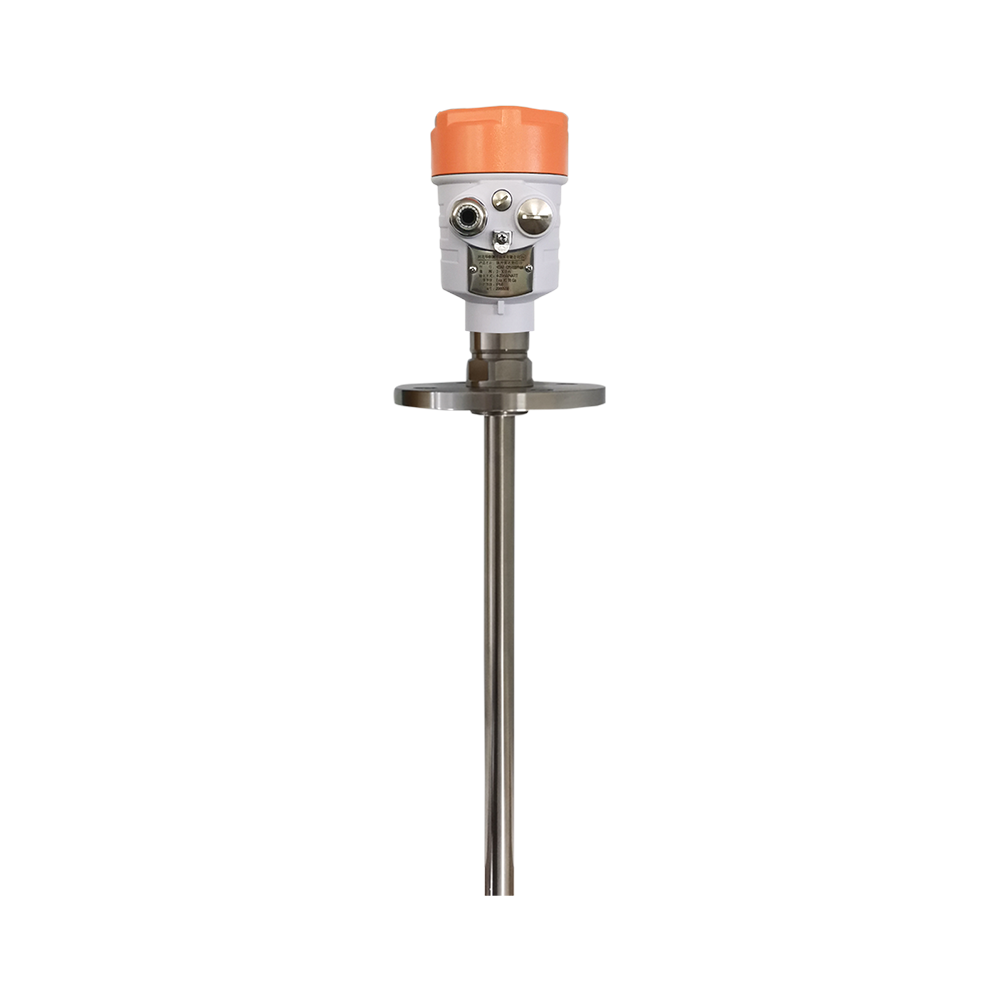
HCCK’s official HCDAR-56 product page identifies it for liquids with a fluctuating surface and uses a coaxial guided wave antenna structure. The official application description explains that the guide tube helps isolate surface movement inside the tube, reducing the effect of liquid fluctuation in the measurement area. The coaxial structure also strengthens signal transmission, making it suitable for liquids with a relatively low dielectric constant. The technical value is not that the liquid surface is completely eliminated from the measurement; rather, the guide tube and coaxial structure constrain the measurement zone and help reduce the influence of external turbulence on echo recognition.
During selection, first confirm whether the liquid surface is strongly agitated, whether the medium has a relatively low dielectric constant, whether the tank contains an agitator or heating element, and whether the available probe length and process connection match the installation conditions. HCCK’s official guided wave radar information lists two-wire 4–20mA@HART and four-wire RS485@MODBUS output options, with four-wire supply as low as 12VDC. The exact output, power supply and probe configuration should be confirmed from the latest official information for the selected model and the project requirements. Configuration details should not be transferred from one model to another without verification.
Before installation, confirm across the complete measuring range that the guided rod or cable will not contact ladders, limit switches, heating equipment, supports or other internal obstacles. The probe or cable should also be kept away from the incoming material or liquid flow. HCCK’s official installation requirements further state that the maximum level must not enter the measurement blind zone, that an appropriate distance from the vessel wall should be maintained and that the rod or cable should be as perpendicular as possible to the medium surface. For an agitated liquid, the probe should preferably be positioned away from the inlet, strong agitation and areas where bubbles are easily generated.
During commissioning, enter the empty-tank height, full-scale height and relevant application parameters so that the instrument can establish the correct zero and full-scale relationship. Observe the output with a stationary surface, during normal circulation and under the highest expected turbulence. Confirm that the 4mA and 20mA points match the process requirements. If the maximum level approaches the blind zone, do not rely only on software adjustment; recheck the probe length, mounting height and effective measuring range. If the rod or cable is mechanically pulled, impacted or coated with material, investigate the installation and process conditions before treating the issue as an instrument failure.
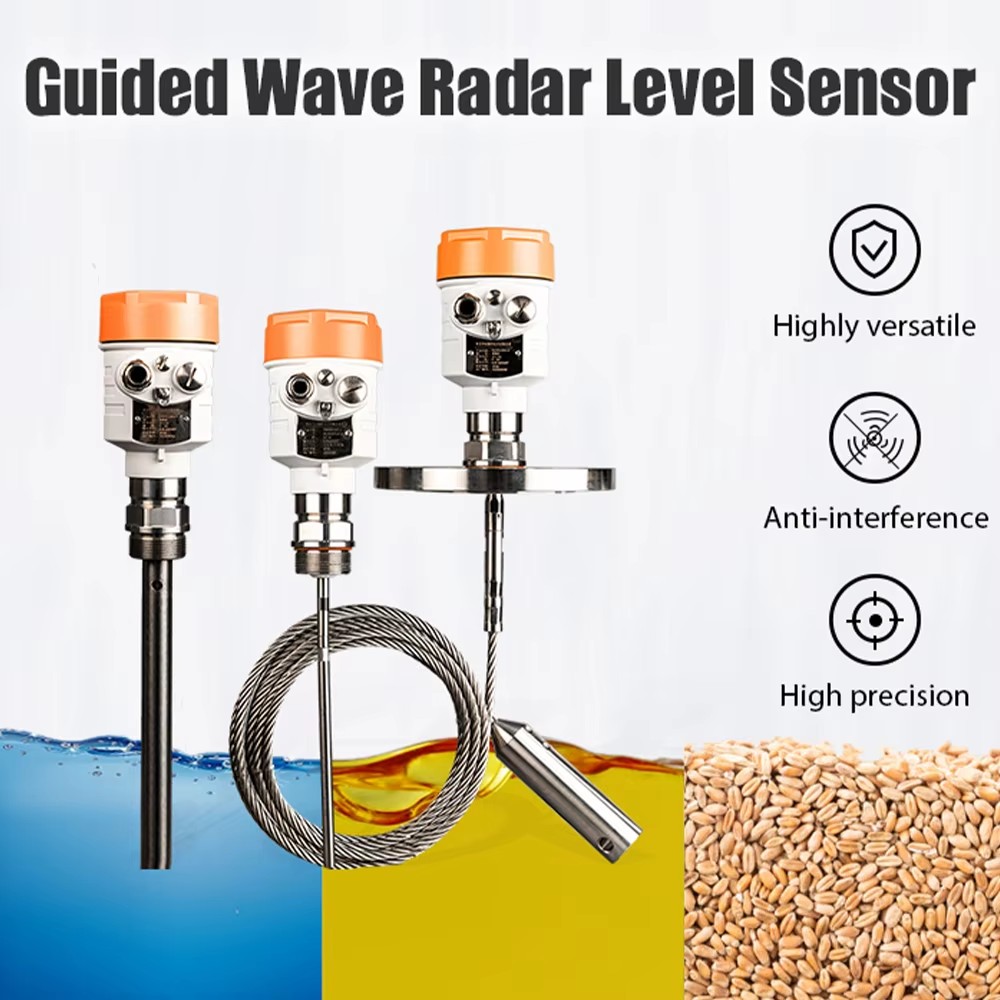
In summary, for liquids with a highly fluctuating surface, the coaxial structure of guided wave radar can constrain the microwave propagation area and strengthen signal transmission, providing a more defined echo path for level measurement. HCCK HCDAR-56 can be included in the technical evaluation for such applications. The final model, probe type, length, process connection, output and power supply should be confirmed according to the medium properties, internal vessel structure and HCCK’s latest official information.
For professional support, visit our Website at www.hhcck.cn/, contact our team via WhatsApp: +86 195 3225 4537, or Email: sales@hhcck.com.


South of Puhui Street, west of Guangsheng East Road, High tech Zone, Fengnan District, Tangshan City, Hebei Province





Technical support:

Tips
Submitted successfully
Back Index