NEWS CENTER
How to Select and Install a Submersible Hydrostatic Level Transmitter for Tanks and Deep Wells
Huachuang measurement and control Huachuang measurement and Control Technology Co., Ltd 2026-09-10 16:07
In clean-water tanks, storage tanks, wastewater treatment basins, deep wells and other liquid facilities, operators often need continuous level information rather than a manual reading taken at one moment. A submersible hydrostatic level transmitter is installed directly in the liquid and determines level from the relationship between hydrostatic pressure and liquid height. According to HCCK’s official information, the submersible level transmitter converts hydrostatic pressure into an electrical signal through a pressure sensor, then applies temperature compensation and linear calibration before providing a standard current or digital output. Unlike a non-contact instrument that must transmit a signal from above the tank or basin, a submersible solution places the sensor inside the liquid and is intended for water-level, wastewater-treatment and various liquid measurement applications.
The selection process should not be reduced to asking whether the probe can simply be placed in water. The project team should confirm the liquid type, level height, bottom structure, flow and turbulence, suspended solids or sediment, installation method and required control-system signal. Because the transmitter may remain immersed for a long period, the probe housing, cable, sealing and sensor isolation structure should match the medium and maintenance conditions. HCCK describes the HCDB-30 as a simple submersible hydrostatic level transmitter for various liquids, water-level measurement and wastewater treatment.
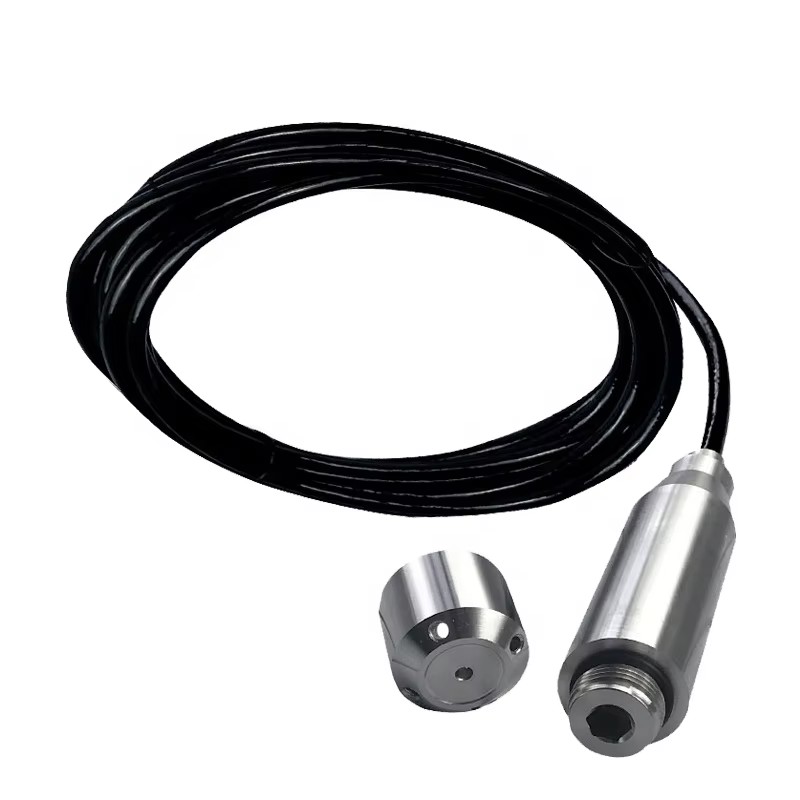
HCDB-30 uses the hydrostatic measurement principle. The liquid applies pressure to the immersed sensor, the sensor converts the pressure change into an electrical signal, and the system uses temperature compensation and linear calibration to obtain the level result. In an open tank or well, the reading is related to the immersion depth of the sensor. In applications with significant flow, pump start-stop conditions or inlet impact, the reading must also be evaluated together with the mounting location and liquid-surface fluctuation. Hydrostatic measurement does not remove natural level fluctuation, so the installation point should be kept away from a direct inlet, strong mixing zone or pump suction area where possible.
HCCK’s official HCDB-30 information states that the product uses a high-quality cable with a vent tube and can be supplied with a local display. Two sensor forms are available, and a large-hole sensor design is offered for different operating conditions to reduce clogging risk and support corrosion-resistant applications. The product also uses an imported silicon piezoresistive sensor. The official page states that the simple version does not include a display and cannot directly provide local display; the maximum measurement can reach 350 m, with special customization available beyond this range; and the output can be selected as 4–20 mA or RS485 MODBUS standard protocol.
These specifications mean that both measuring height and communication method should be considered. For a project connected to a PLC, data-acquisition terminal or remote monitoring system, confirm in advance whether 4–20 mA or RS485 MODBUS is more suitable. For wastewater, liquids containing impurities or applications where sediment may accumulate, discuss the sensor-structure options shown in the official information and confirm the anti-clogging and maintenance plan. The exact range, sensor form and cable length must be selected according to the site conditions and HCCK’s latest technical documentation rather than being inferred from tank depth alone.
Before installation, confirm the effective level height, minimum and maximum levels, expected sensor depth, possible sludge or sediment at the bottom, liquid flow rate, cable fixing points and control-cabinet location. The sensor should not rest directly on the bottom, remain pressed against the wall or be continuously exposed to an incoming jet. These conditions may cause measurement deviation, probe contamination or mechanical stress on the cable. In a deep well, use a reliable cable fixing and protection method to prevent abrasion at the well opening during installation or maintenance.
The vent path in a vented cable should remain unobstructed, and the cable end and termination should be protected from moisture. If the site contains wastewater, corrosive media, floating materials or a high concentration of suspended solids, provide the medium information to the technical team and confirm the sensor-hole structure, materials and maintenance interval. During commissioning, observe the output under a stable liquid surface, filling, draining and pump start-stop conditions. Check the displayed value against a manual level reading or another reliable reference. If the output remains fixed, changes sharply or moves contrary to the actual level, first inspect sensor depth, cable venting, probe blockage, sediment coverage and site interference instead of immediately concluding that the sensor has failed.
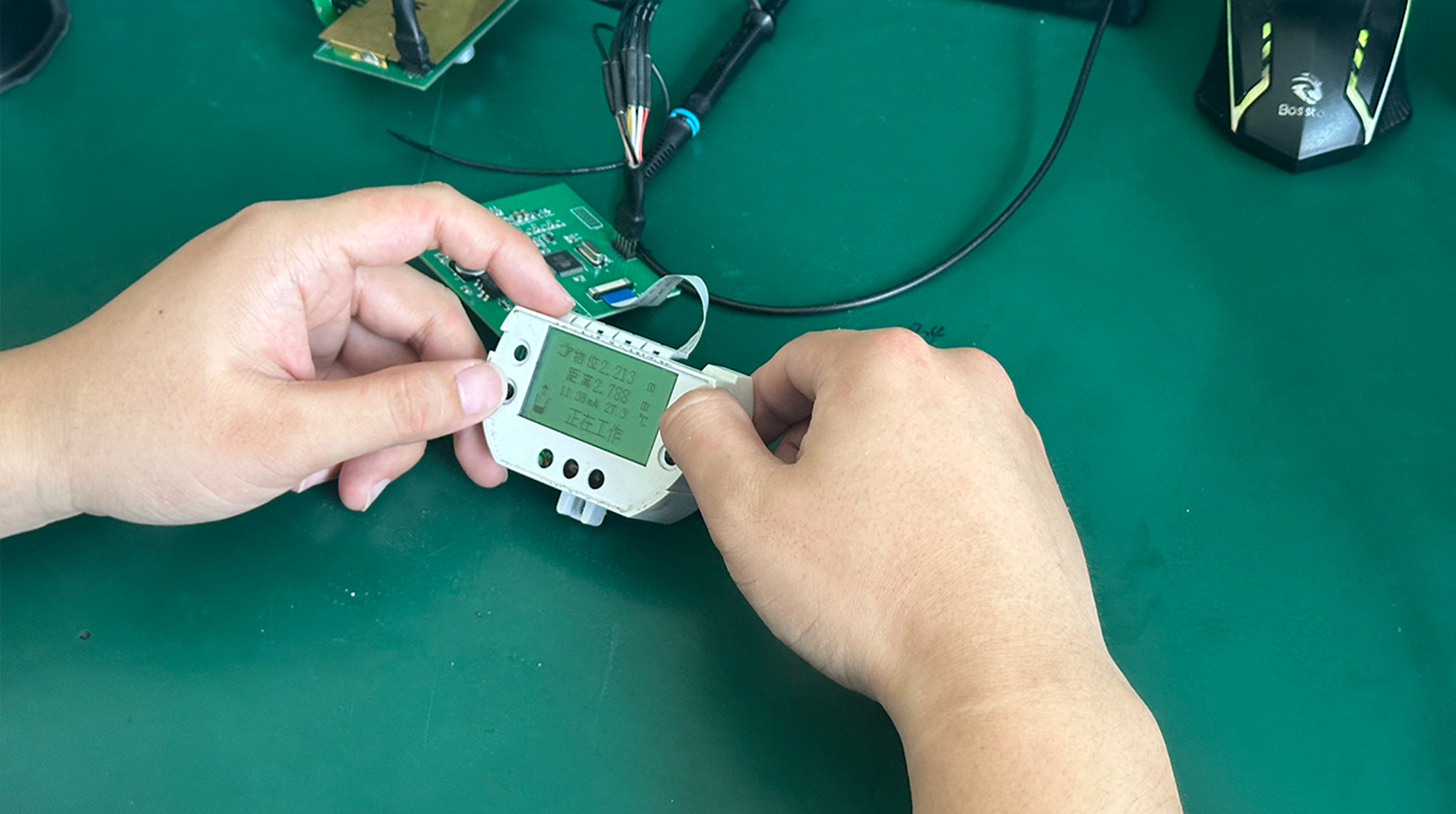
A submersible hydrostatic level transmitter is suitable for continuous level measurement in water tanks, storage tanks, wastewater facilities and deep wells, but stable measurement depends on the correct range, sensor structure, cable installation and maintenance plan. HCCK HCDB-30 can be included in the technical evaluation for such projects. The final model, output, measuring range and installation method should be confirmed according to the actual liquid, depth and control-system requirements.
For professional support, visit our Website at www.hhcck.cn/, contact our team via WhatsApp: +86 195 3225 4537, or Email: sales@hhcck.com


South of Puhui Street, west of Guangsheng East Road, High tech Zone, Fengnan District, Tangshan City, Hebei Province





Technical support:

Tips
Submitted successfully
Back Index