NEWS CENTER
How to achieve the best performance of the radar level sensor? (2)
Huachuang measurement and control Huachuang measurement and Control Technology Co., Ltd 2026-03-19 15:40
As was mentioned last time, there are many factors that affect the accuracy and availability of the measurement signal, including frequency, antenna type, installation conditions, and the dielectric constant of the material being measured. The influence of the frequency effect was introduced, and now we will discuss the impact on the antenna aspect.
Considerations related to antennas
The size and type of the antenna also affect the beam angle. The lower the antenna frequency, the smaller the antenna, and the wider the beam angle. Increasing the frequency or enlarging the antenna size can reduce the beam angle.
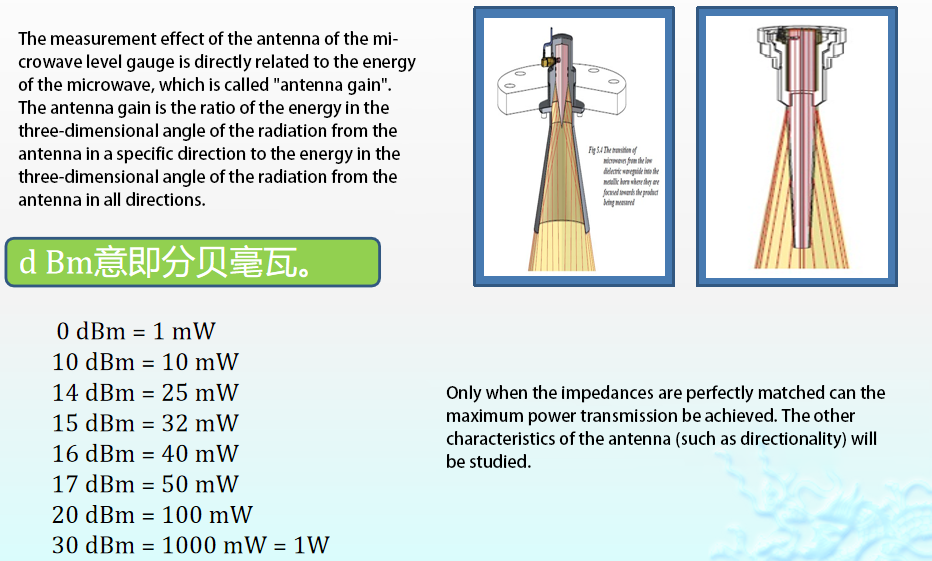
Many people believe that the minimum beam angle is the best choice for level measurement, which is a general rule. Reducing the beam angle enables the microwave energy to more easily bypass the container walls, stirrers, and other obstacles inside the tank. The transmitting frequency of the radar is different from its antenna type. The waveguide radar antenna is a waveguide rod or waveguide cable, and it needs to come into contactwith the measured medium to measure the level.
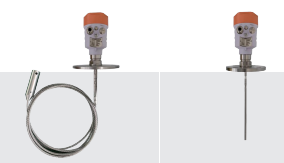
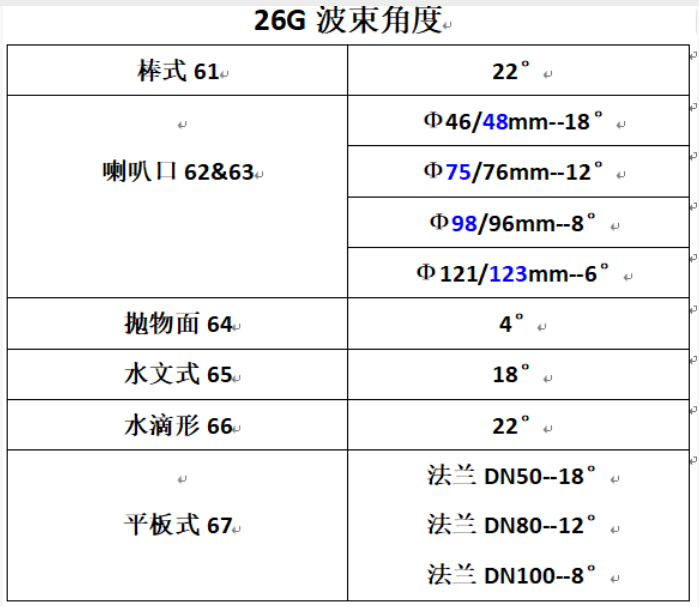
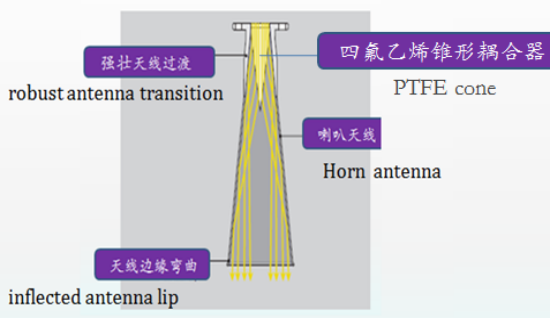
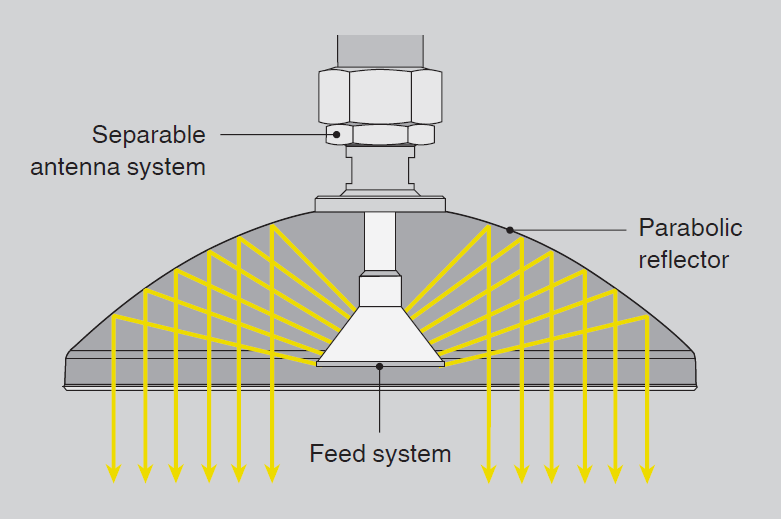
The antenna of 26G pulse radar is usually in the shape of a trumpet, but there are also rod-shaped, water-drop-shaped, parabolic-shaped and flat-shaped types.
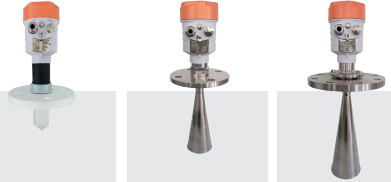
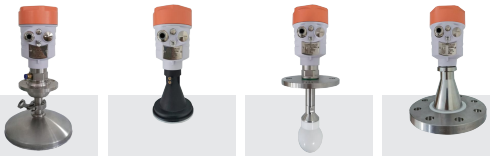
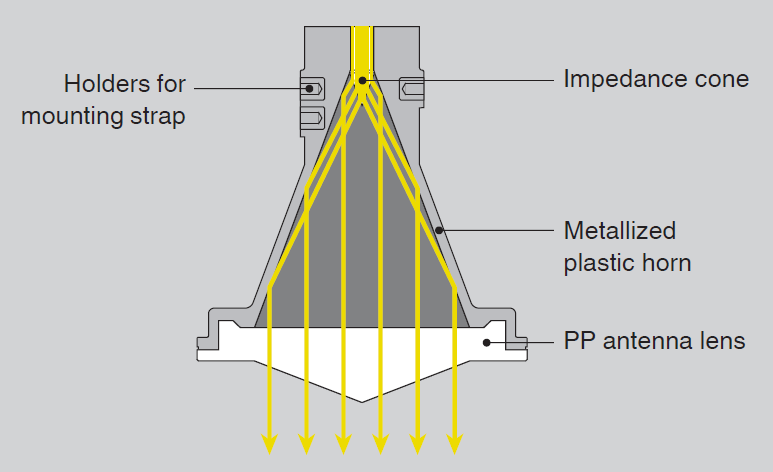
The transmitting antenna of the 80G frequency-modulated continuous-wave radar is of a convex lens shape. This design facilitates better focusing, resulting in a smaller beam angle and enhanced concentration of power.
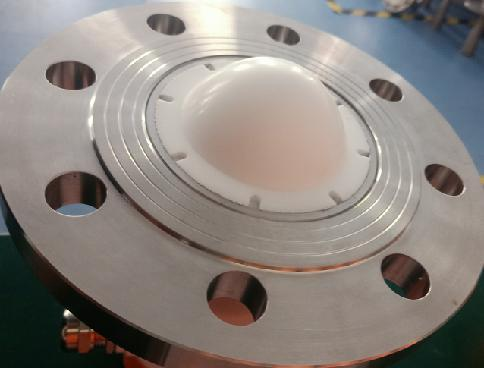
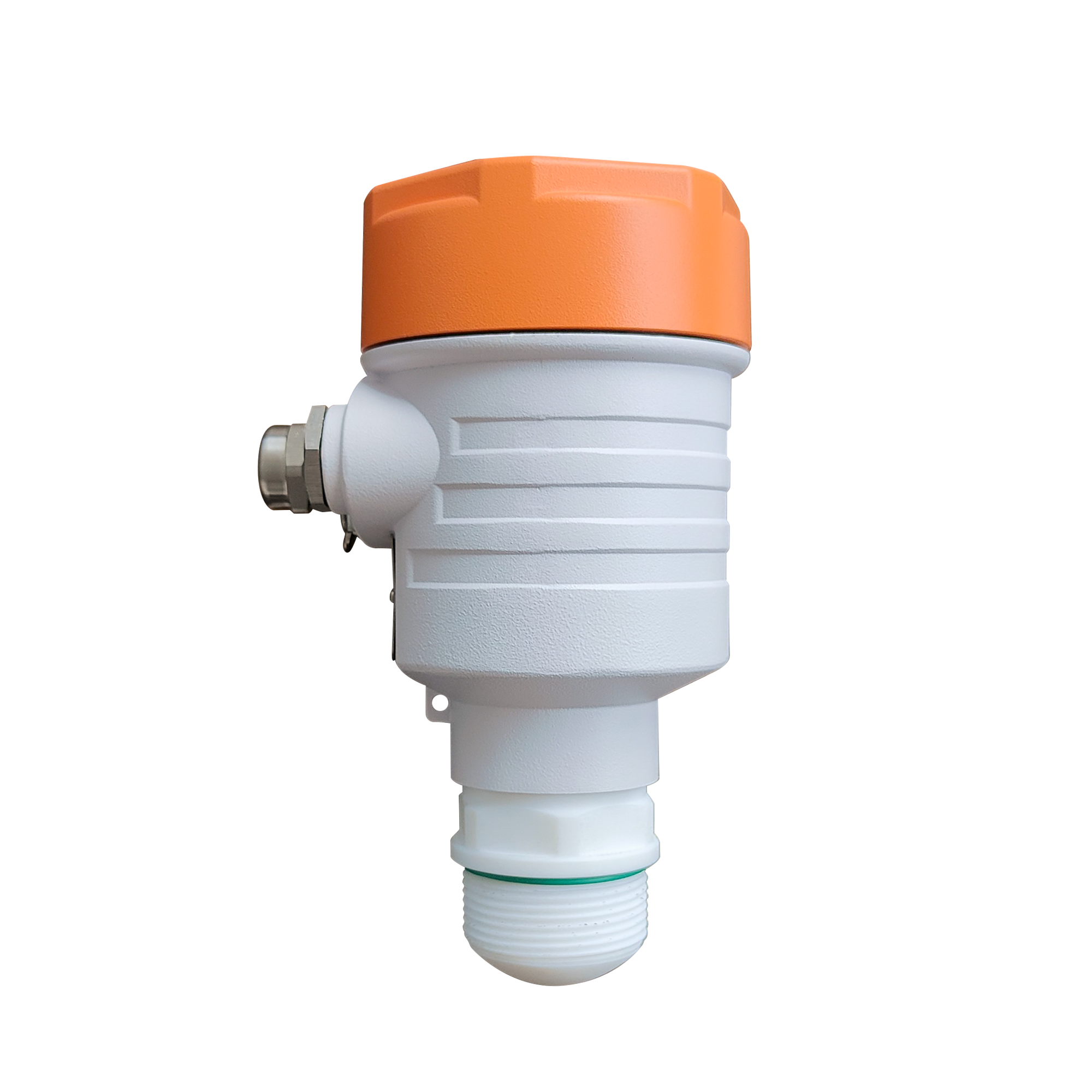
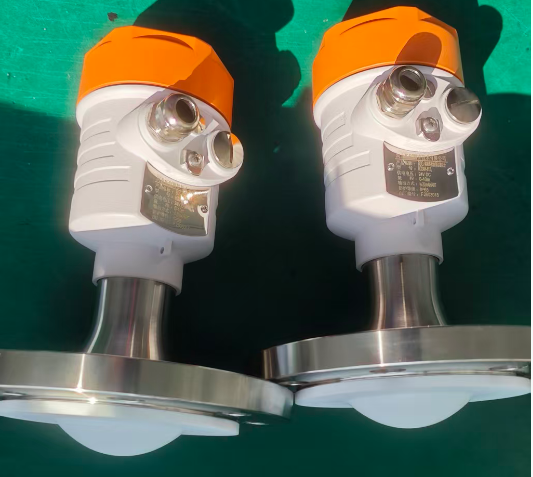
The beam angle configured for the radar transmitter should not intersect with the container walls or obstacles. This is the ideal situation.However, it is important to understand that even if the beam intersects with an obstacle or a wall, this does not necessarily mean that the installation will fail. Intersection with the wall may cause some energy loss, but it is usually insignificant. The beam angle of the 80G frequency-modulated continuous-wave radar: with a 1.5-inch lens antenna, it is 8°; with a 3.5-inch lens antenna, it is 3°. The following figure shows the beam angles of different antennas for the 26GHz pulse radar:
The horn-shaped antenna of the 26G pulse radar emits a beam of waves
The planar antenna of the 26G pulse radar emits a wave beam.
The parabolic antenna of the 26G pulse radar emits a wave beam.
By examining the echo curve of the radar itself, it is possible to identify the obstacles in the radar beam path and map them out, so as to eliminate their influence from the signal assessment. The most effective way to eliminate their influence is to conduct false echo learning, covering the invalid false signals to eliminate their impact.
People often believe that if the beam angle intersects with the container wall, it would not be suitable for application in free-space radar. When the radar is installed, it is ideal for the beam angle not to intersect with the container wall. However, in reality, due to the interference from installation position, angle and other factors, it is almost impossible to achieve this. By choosing the appropriate frequency, antenna size and container mapping, it is possible to ensure the successful implementation of most applications.
If you have any needs, please contact us!
Contact number: 400-851-0898


South of Puhui Street, west of Guangsheng East Road, High tech Zone, Fengnan District, Tangshan City, Hebei Province





Technical support:

Tips
Submitted successfully
Back Index