NEWS CENTER
How to achieve the best performance of the radar level sensor? (3)
Huachuang measurement and control Huachuang measurement and Control Technology Co., Ltd 2026-03-19 16:54
Continuing from the previous part, the following will introduce the measurement range of the radar, its installation, and the influence of the dielectric constant of the measured medium.
Measuring range
The frequency and antenna size have an impact on the measurement range. However, the dielectric constant of the material being measured and the installation conditions of the measurement setup also have a significant influence on the measurement range.
Low-frequency signals have longer wavelengths and can transmit over shorter distances compared to high-frequency signals. The range that radar transmitters can measure is approximately as follows: guided-wave radar (0.5 - 1.8 GHz) has a maximum measurement range of 20 meters; pulse radar TOF (26 GHz) has a maximum measurement range of 70 meters; frequency-modulated continuous wave FMCW radar (80 GHz) has a maximum measurement range of 120 meters. For most applications, this is sufficient. When selecting a radar, the suitable measurement range and antenna size should be chosen based on the actual working conditions and the measured medium. For example, in a steam-containing environment, a 3.5-inch lens antenna with 80G radar should be selected; in a dust-containing environment, a 3.5-inch 80G radar or a 121 with a large horn opening 26G radar should be chosen. Moreover, different antenna types and different measurement ranges have different radar measurement blind zones.
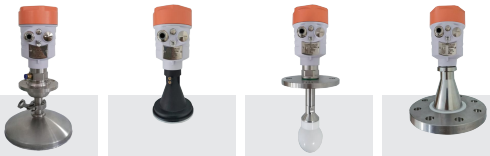
The size and type of the antenna also have an impact on the transmission distance. A large antenna can transmit over a greater distance than a small one, and its energy concentration is also stronger. Horn antennas, "droplet" antennas, "parabolic" antennas, pole antennas and planar antennas are all antenna styles designed to meet different application requirements and measurement ranges.
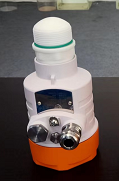
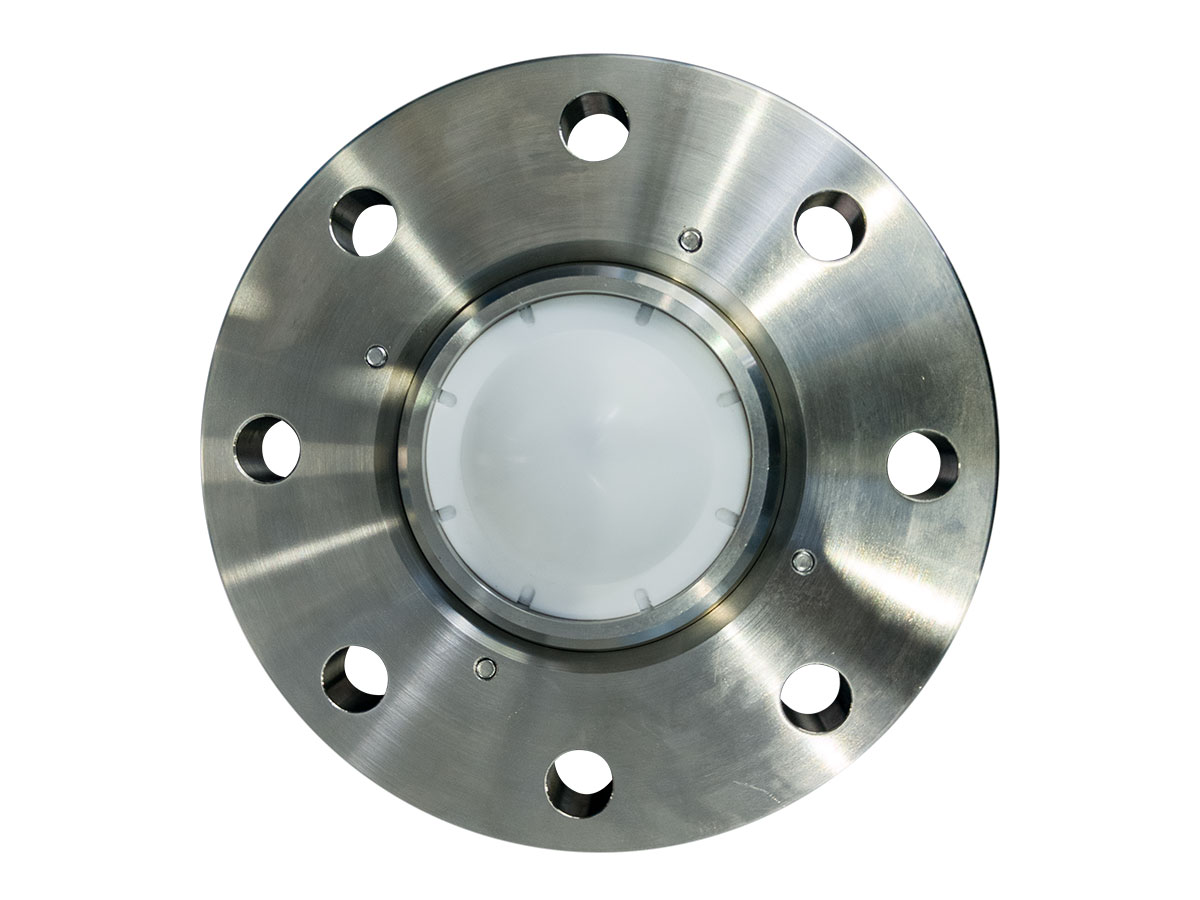
Installation conditions for the radar transmitter
Even if the best radar is chosen, improper installation can still lead to adverse consequences. During the installation process, the existing conditions must be taken into account. The dielectric constant of the material being measured, the type of installation, the location, and the target surface all have an impact.
Condensation, usually formed by water on the antenna of the radar transmitter, can cause problems. The dielectric constant of water is as high as 80dc. In a typical horn-shaped antenna, water droplets condense inside the horn, causing interference and affecting the transmission of electromagnetic signals. This interference results in "noise" in the signal and reduces energy. If there is enough condensed water, it can cause the radar to lock onto the near area, leading to a malfunction.
To address the issue of condensation, several specialized antenna designs have been developed to avoid the effects of "condensation". If traditional horn-type antennas must be used under application conditions, a Teflon sleeve can be added to prevent radar condensation; in dusty conditions, blowing can be used to prevent dust accumulation. Since the air dielectric strength is very low, it does not interfere with microwave signals. Using air with a pressure of 60 to 70 psi for blowing, such as an impact wave activated by an electromagnetic valve, can keep the horn clean, which is a common and effective method.
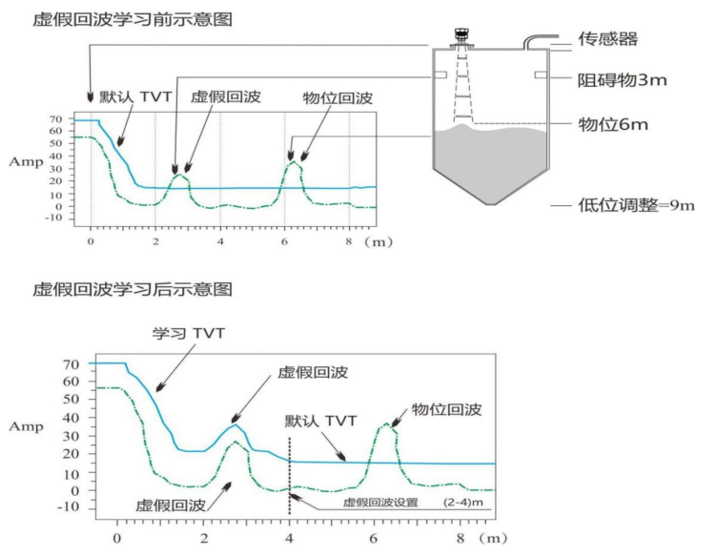
The internal obstacles within the container must be taken into account. Stirring devices, heating coils, jackets, and other components within the container may interfere with radar transmission. The narrower beam angle of the 80 GHz radar is highly effective in avoiding most obstacles; the remaining unavoidable parts need to be eliminated from the signal assessment to prevent the transmitter from mistaking the obstacles for false level signals.
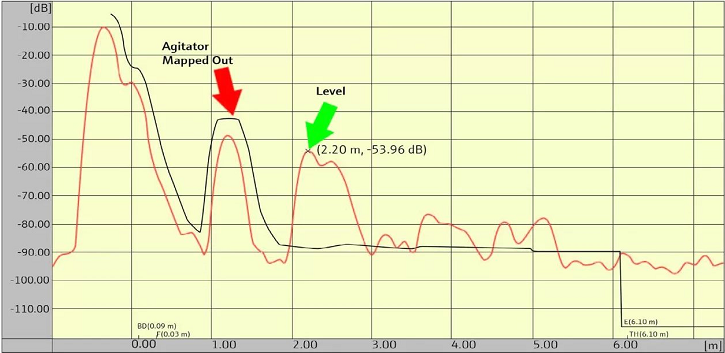
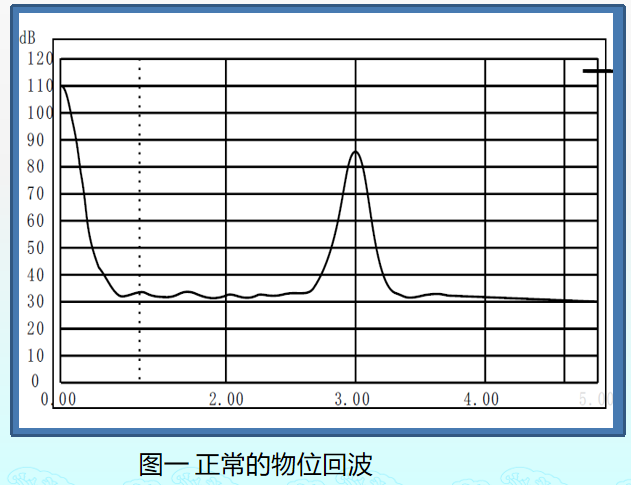
The figure shows the envelope curve of the mixer signal.
Usually, the interfering signals are "filtered out", so the radar transmitter ignores them. The figure shows the evaluation of the level measurement signal after eliminating the disturbance from the agitator through false echoes learning. The red line in the figure represents the signal provided by the returned microwave energy. The black line eliminates the signal reflected by the agitator, so the transmitter only calculates the actual level signal. For the valid and regarded as the level signal, the signal level must be higher than that shown in the figure.
The curve with false interference signals is shown in the following figure:
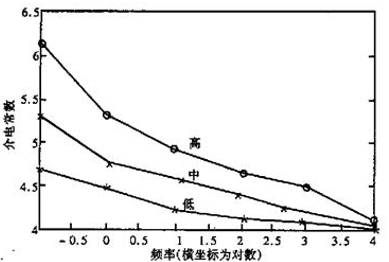
The influence of dielectric constant: When microwave energy reaches the object being measured, the change in dielectric constant (at the surface of liquids or solids) causes a change in impedance, and the microwave energy is reflected. The reflected energy depends on the dielectric constant of the measured material. Materials with high dielectric constants, such as water, will reflect all or most of the energy. Materials with low dielectric constants, such as hydrocarbons, reflect less energy. The following figure shows the relationship between dielectric constant and frequency:
Not only the frequency of the radar, but also the antenna design, intelligent algorithms and installation location all play important roles in the successful measurement of the material level in tanks or silos. The more complex and the higher the precision requirements of the application, the more crucial it is to obtain the optimal frequency and antenna design.
If you have any needs, please contact us!
Contact number: 400-851-0898


South of Puhui Street, west of Guangsheng East Road, High tech Zone, Fengnan District, Tangshan City, Hebei Province





Technical support:

Tips
Submitted successfully
Back Index