NEWS CENTER
How to Choose Between 80GHz Radar Level Transmitter and Millimeter-Wave 3D Scanner for Silo & Bin Inventory Measurement
Huachuang measurement and control Huachuang measurement and Control Technology Co., Ltd 2026-10-28 14:05
1.What are the essential differences between 80GHz radar level transmitters and millimeter-wave 3D scanners for bulk solid silo measurement? Both devices apply high-frequency microwave technology for silo inventory monitoring, but they serve different measurement purposes. The 80GHz FMCW narrow-beam radar level transmitter focuses on single-point distance measurement. It outputs a continuous level value at the installed beam point, suitable for real-time level tracking, high/low level alarm and process interlock. It works reliably under heavy dust, high temperature and pressure, with low installation cost and simple debugging. The HCCK millimeter-wave 3D scanner captures hundreds of measuring points simultaneously to build a complete 3D surface map of uneven, peaked, cratered bulk material. It directly calculates the total material volume and mass, instead of relying on a single point to estimate inventory. It solves the measurement error caused by material arching, eccentric feeding and irregular material surface, which single-point radar cannot eliminate. Many users only need level control, while accurate inventory reconciliation requires 3D scanning.
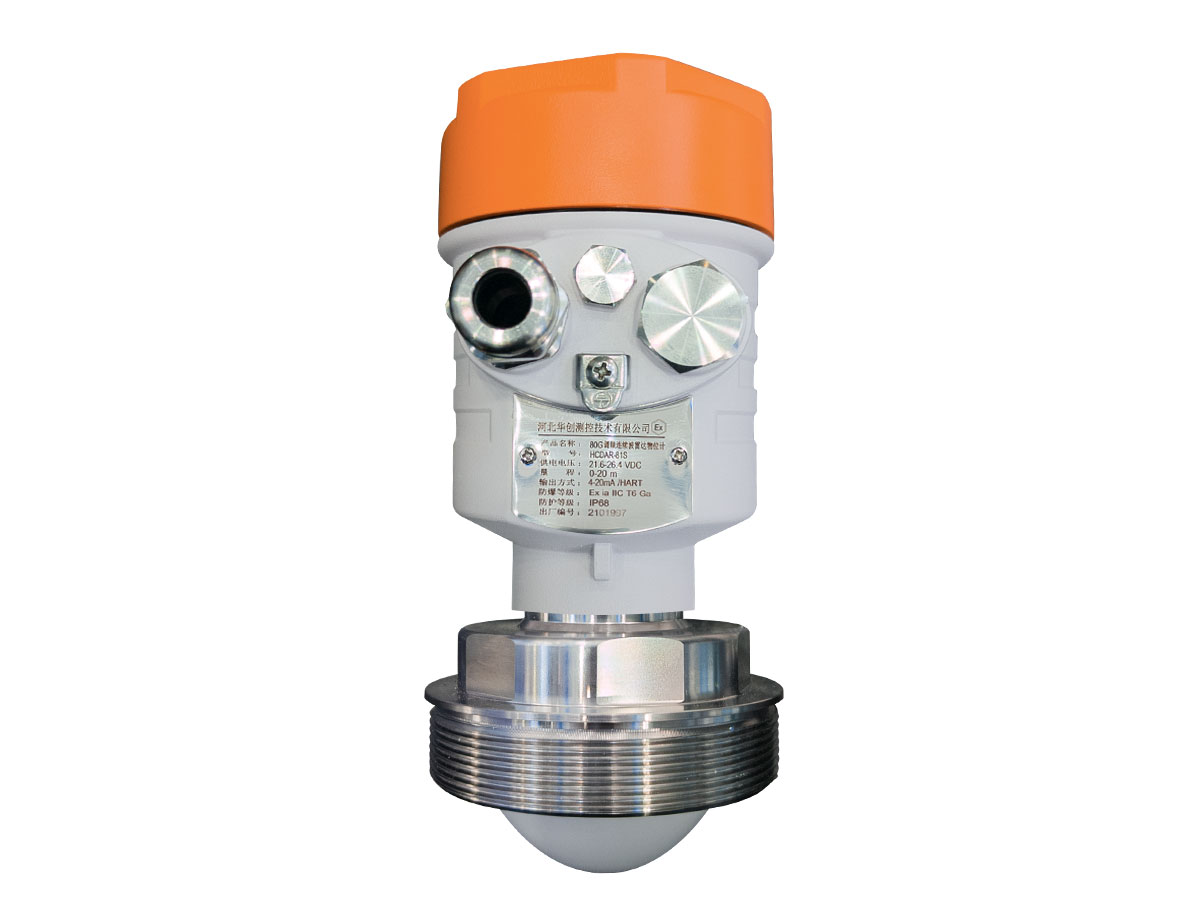
2.HCCK application matching rules for 80GHz radar and millimeter-wave 3D scanner For cement raw meal silos, feed bins, mineral powder silos and grain storage tanks, HCCK provides targeted matching schemes according to user core demands. If the requirement is continuous level monitoring, overfill prevention and production interlock control, the 80GHz radar level transmitter is the preferred solution. It supports multiple antenna options including horn and parabolic antennas, built-in false echo suppression algorithm, and adapts to strong dust environments. It outputs 4-20mA and Modbus-RTU signals for connection to PLC and HCCK Industrial IoT Cloud Platform. If users need accurate inventory counting, material volume statistics and stock reconciliation for fiscal settlement, the millimeter-wave 3D scanner is recommended. Multiple scanners can work together for large-diameter silos to fully cover the material surface. Both products support explosion-proof and intrinsically safe versions for hazardous areas such as chemical and power industries.
3.Site installation constraints and pre-order parameter checklist Before selecting instruments, HCCK engineers evaluate site conditions to avoid scheme mismatch. For 80GHz radar: confirm silo diameter, internal baffles, agitators and feeding openings to ensure the beam path is clear; select parabolic antenna for extremely dusty conditions. For millimeter-wave 3D scanners: confirm silo inner diameter, silo height, material repose angle and whether multi-device splicing is required to cover the whole surface. Common verification parameters include medium type, dust concentration, working temperature, explosion zone, communication mode and whether cloud remote monitoring is needed. After installation, radar requires echo mapping and damping adjustment; 3D scanners need coordinate calibration and material surface model configuration to output stable volume data.
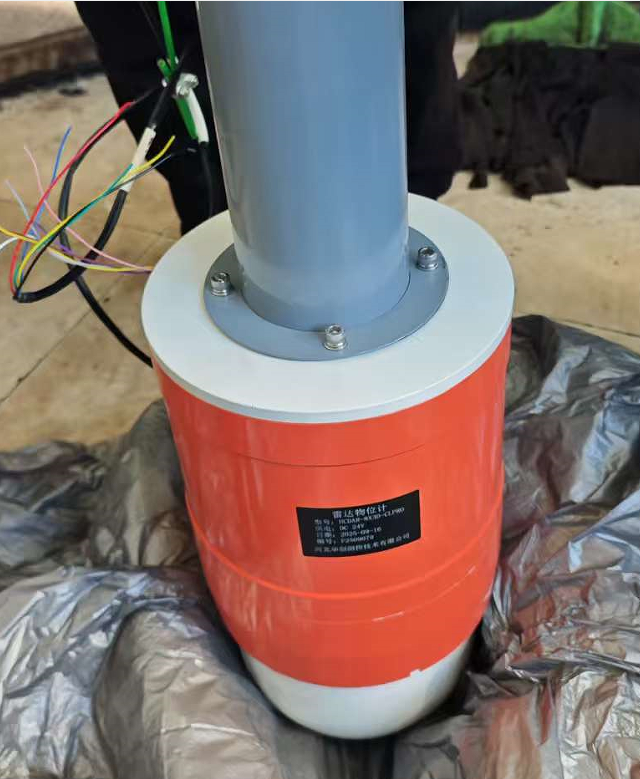
For professional support, visit our Website at http://www.hhcck.cn/ , contact our team via WhatsApp: +86 150 2761 6330, or Email: sales@hhcck.com.


South of Puhui Street, west of Guangsheng East Road, High tech Zone, Fengnan District, Tangshan City, Hebei Province





Technical support:

Tips
Submitted successfully
Back Index