NEWS CENTER
The Application and Differences of PLC and DCS
Huachuang measurement and control Huachuang measurement and Control Technology Co., Ltd 2026-07-27 09:05
PLC and DCS are the two core control systems in the field of industrial automation. What are the differences and connections between them?
I. Differences
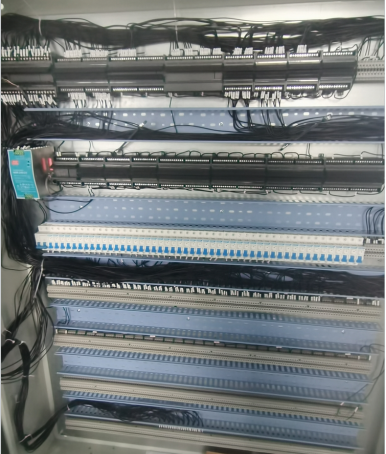
The PLC (Programmable Logic Controller) was born in the late 1960s. It was initially proposed by General Motors of the United States to meet the demand for frequent model adaptations of automobiles. Its primary purpose was to replace the traditional relay-based logic control. The core objective was to handle rapid logic control of switch quantities (such as motor start-stop, valve opening-closing), emphasizing high reliability and fast response speed. The system architecture of PLC is relatively centralized, and its scalability has certain limitations. It is more suitable for small and medium-sized industrial control scenarios.
The DCS (Distributed Control System) was born in the 1970s. Initially designed to address the "centralized monitoring and decentralized control" requirements of large-scale process industries (such as chemical, petrochemical, and power), its core concept was "distributing risks and concentrating data". It aims to handle the precise control of continuous variables (such as temperature, pressure, and flow), while achieving stable operation of large-scale systems and data integration. DCS adopts a distributed architecture, supporting the collaborative work of multiple control units, enabling centralized monitoring and networked data sharing, and possesses excellent scalability and flexibility.
The core function of PLC is logical control, covering three basic logical relationships: "AND", "OR" and "NOT". It performs logical operations on input signals to generate corresponding output signals, thereby achieving automatic control of the controlled object.
The main function of DCS is process control, aiming to keep the continuous variables (such as temperature, pressure, flow rate, liquid level, component concentration, etc.) in industrial processes close to the set values, and achieving precise regulation and stable control of these continuous variables.
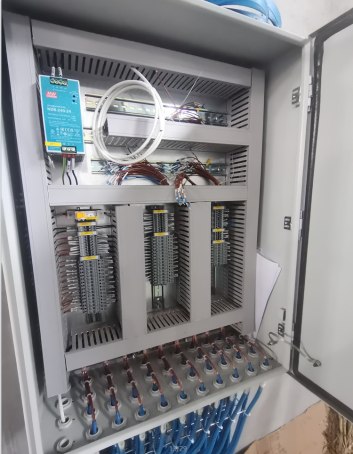
PLC is proficient in handling on-off control and sequential control, with fast response speed. It can achieve high-speed logical operations and precise control of equipment actions. Therefore, it is widely used in discrete manufacturing industries, especially in fields such as automotive manufacturing, electronic assembly, packaging machinery, and logistics automation. It can complete tasks such as precise positioning, speed adjustment, and multi-device collaboration.
DCS focuses on analog quantity regulation and continuous process control, excelling in precisely controlling continuous variables such as temperature, pressure, flow rate, and liquid level. It has stronger data processing capabilities and can handle more complex control logic and larger amounts of data. However, its real-time performance is slightly inferior to that of PLC systems.
Therefore, DCS is more widely applied in the process industry, especially in large-scale chemical production, petroleum refining, power generation, pharmaceutical manufacturing and other continuous production processes, where it can ensure the precise control of process parameters and the stability of product quality.
II. Connection
Firstly, both adopt digital control methods instead of traditional analog control or relay control, significantly enhancing the control accuracy and reliability;
Secondly, both are programmable. They can be flexibly configured and programmed according to different control requirements, and are suitable for various complex industrial control scenarios.
Furthermore, both of them possess robust data collection and processing capabilities, which can monitor various parameters in industrial processes in real time, providing data support for production management and decision-making.
With the advancement of technology, the functional boundaries between PLC and DCS are gradually blurring, showing a trend of functional integration. Modern PLCs not only retain the core logic control function but also add capabilities such as analog control, data processing and communication, enabling simple process control; while DCS systems also integrate the logic control function and can complete logical control tasks such as sequential control and interlock protection. In summary, PLC and DCS have their own strengths in the field of industrial automation and are interrelated.
III. Application Cases
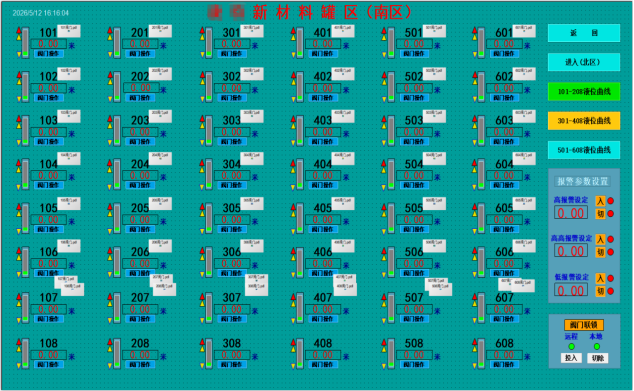
The liquid level monitoring system for over 80 storage tanks of a certain new material company uses PLC to perfectly meet the customer's process requirements.
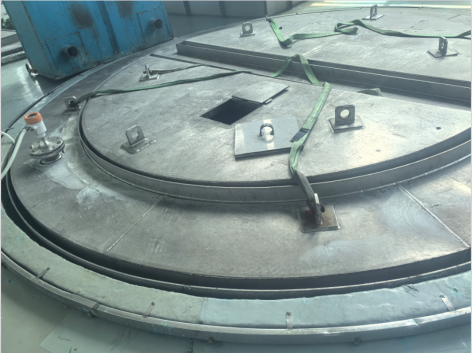
A certain technology company has adopted our company's independently developed and designed 80G frequency-modulated continuous wave radar level gauge to accurately detect the liquid level in the DCS system.
If you have any needs, please contact us!
Contact number: 19931378277


South of Puhui Street, west of Guangsheng East Road, High tech Zone, Fengnan District, Tangshan City, Hebei Province





Technical support:

Tips
Submitted successfully
Back Index